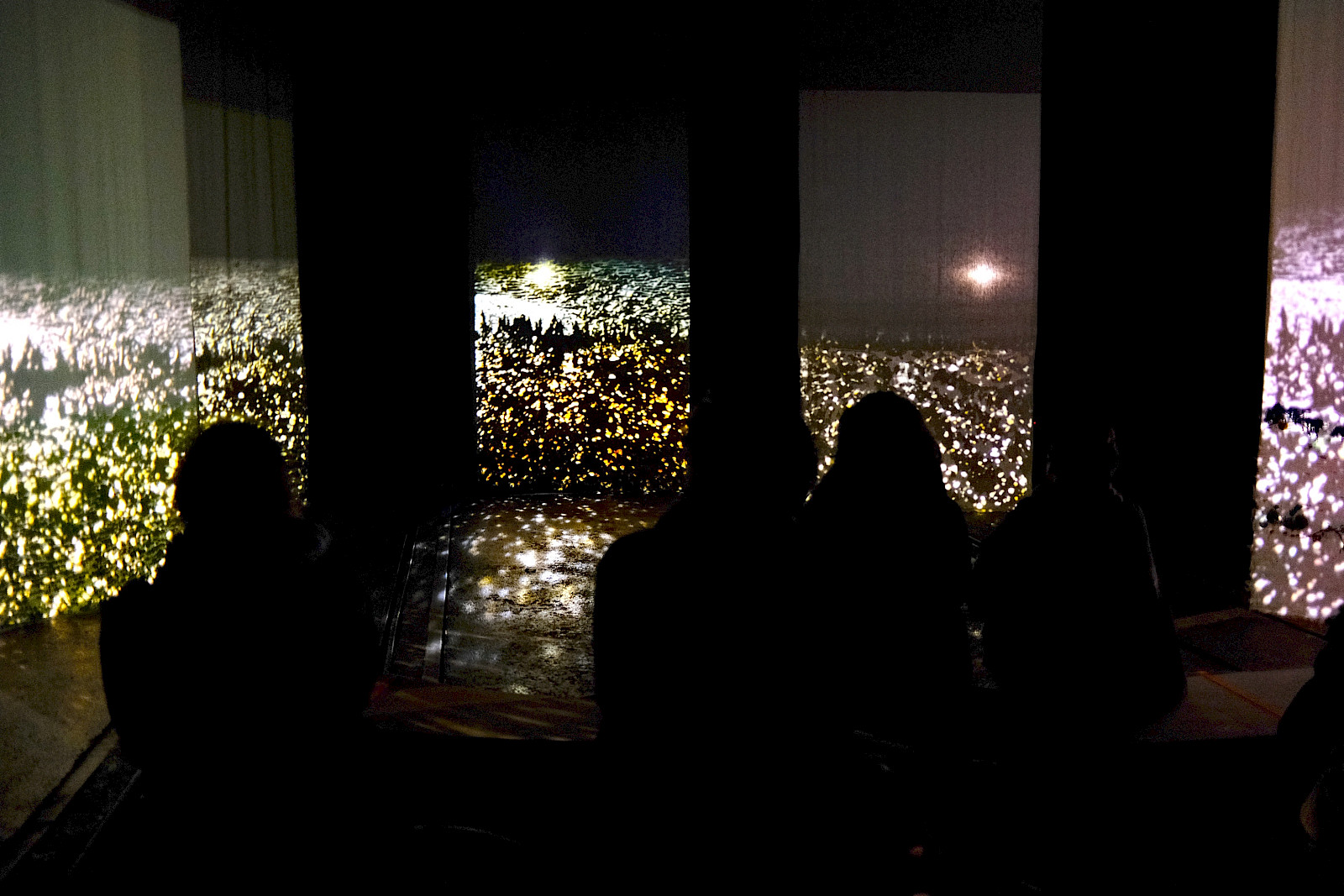
Floodlight (2026)
In 2023, a malfunction at the IJmuiden sluices briefly made visible what Amsterdam already knows: the city sits below the sea. The water couldn't be pumped out. For a moment, the future arrived early.
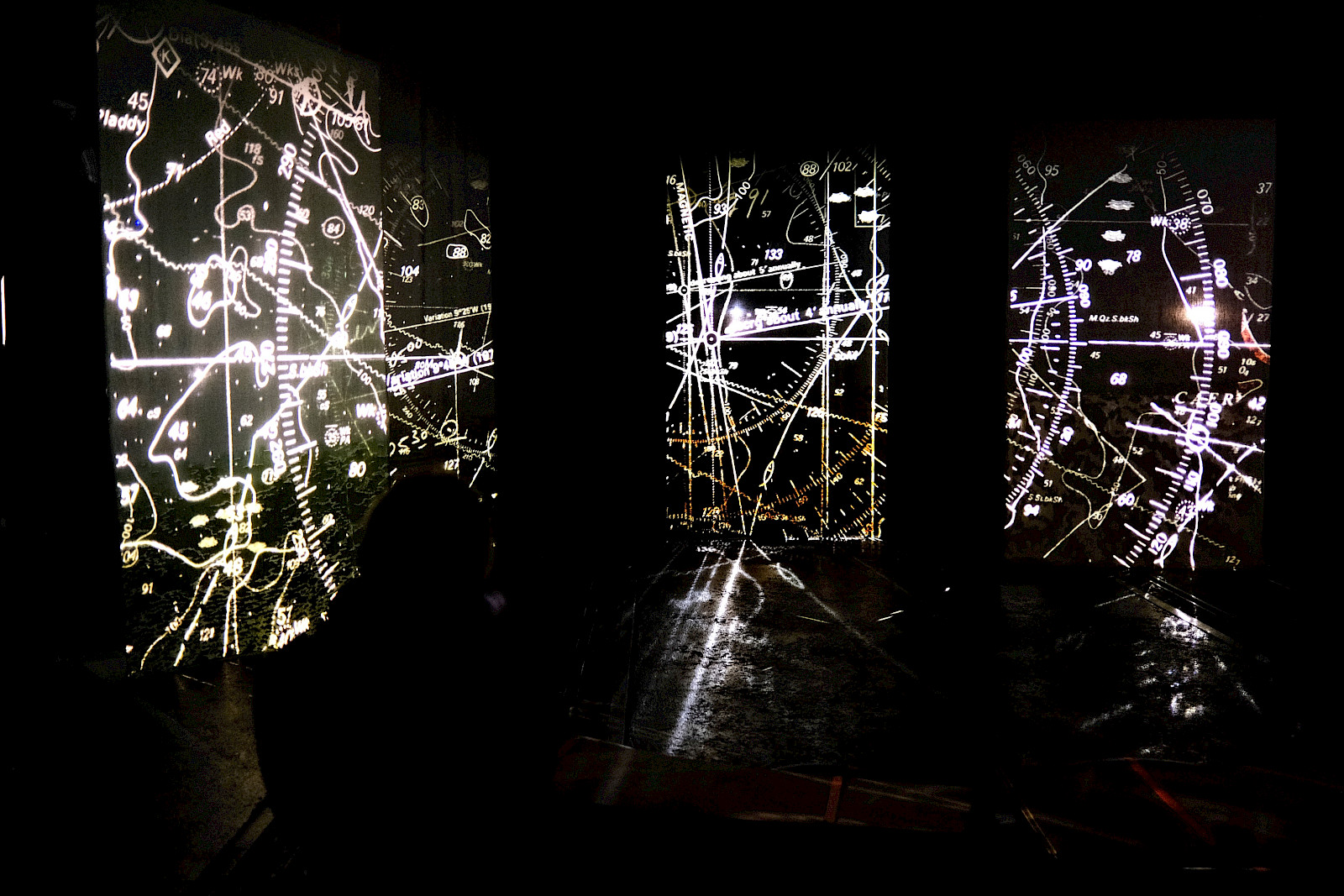
Floodlight takes you into that future. Seated on rafts, you look toward a horizon of weathered canvases: surfaces that have themselves passed through water, dipped in tidal clay, threaded with metal wire that rusted in brackish tides, left at the flood line where seaweed, fishing line and plastic gathered and dried. Onto these surfaces, moving images are projected: modified underwater footage from the Amsterdam canals, the Oosterdok, the wider Dutch coast, animated into the sensation of looking up from the seabed as light filters through. The city, navigated now by sea chart, continues its life, changed and slowly overgrown.
A spatial soundscape drawn from hydrophone recordings made throughout the region surrounds the space: rain on the surface, frogs in the Oostenburgervaart, the subaqueous rumble of trains and ships, seaweed crackling at low tide, a fog buoy, shipping forecasts drifting in from a distant radio station.
The canvases carry the marks of their encounter with water already in their surfaces: tidal clay, rust blooms, the residue of the wrack line. The projected images don't overwrite these marks but grow out of them, a speculative ecology layered onto material already shaped by time and tide.